
Reviewed · WALKING TOURS
Helsinki: Architectural Highlights Guided Walking Tour
Helsinki reveals itself best through its buildings. This three-hour walk moves from Senate Square and neoclassical Helsinki to Oodi, Amos Rex, and the newer city center, showing how Finland’s capital changed from imperial outpost to modern design city. The guide, usually identified as Zana, brings in history, politics, culture, and even small details in carved stone that are easy to miss.
I like the small group of no more than six, which gives you room to ask questions and adjust the discussion. I also like the chance to go inside several buildings, including the National Library, Academic Bookstore, and Oodi, rather than simply stopping for exterior photographs. The main consideration is the 5 to 6 kilometers of walking, often outdoors in changing weather, with some stops limited by weekend opening hours.
Key points to know before you book

- See Helsinki through many architectural eras: The route includes neoclassical, Art Nouveau, Nordic Classicism, functionalism, modernism, and contemporary design.
- Expect more than a building tour: Zana connects architecture with Finnish history, culture, politics, customs, food, and language.
- Go inside major public buildings: The National Library, Academic Bookstore, Central Library Oodi, and other interiors give the walk extra value.
- Request your preferred focus: Tell the provider in advance if you want more attention on a particular period, architect, or style.
- Plan for a full city walk: The route lasts three hours and covers roughly 5 to 6 kilometers, rain or shine.
- Weekdays may offer more access: Some office buildings are not open on weekends, so a weekday booking can provide a fuller visit.
Why Helsinki works so well as an architecture walk
Helsinki is unusually manageable for an architecture tour. Its central sights are close enough to connect on foot, yet the city contains a striking range of styles. In a few hours, you can move from the formal stone buildings around Senate Square to playful Art Nouveau, restrained modernism, and the bold public spaces of present-day Helsinki.
That variety gives the tour a useful shape. You are not looking at isolated monuments with no connection. You are watching the city change over time through its streets, libraries, cafés, shops, stations, and public squares.
The experience also puts architecture in its proper setting. A building is not treated as a pretty façade alone. You learn how it fits Finnish civic life and why a library, railway station, chapel, or department store matters to the people who use it.
The guide’s background as a sociology PhD student suits this approach. Zana’s explanations are not limited to dates and architects. You can ask about Finnish culture, politics, customs, and daily life, then see how those subjects appear in the city’s design.
More walking tours in Helsinki:
- A Finntastic Walking Tour in Helsinki
★ 5.0 · 700 reviews - Epic Helsinki: English Speaking Walking Tour
★ 4.9 · 192 reviews - Helsinki walking tour with a city planner
★ 5.0 · 175 reviews
Starting at Fazer Café Kluuvikatu
The tour begins in front of Fazer Café on Kluuvikatu, a practical central meeting point. Look for the guide outside the café rather than going inside to search for the group.
Starting here puts you close to the older center and makes the first part of the walk feel immediate. You are soon moving toward Senate Square, rather than spending the opening minutes on a bus or waiting for public transport.
The café is also a useful place to meet if you want coffee before the walk. Food and drinks are not included, so plan your own refreshment. The route includes café and restaurant buildings, but those visits are for architecture and atmosphere, not a scheduled meal.
Senate Square and the city’s formal beginning

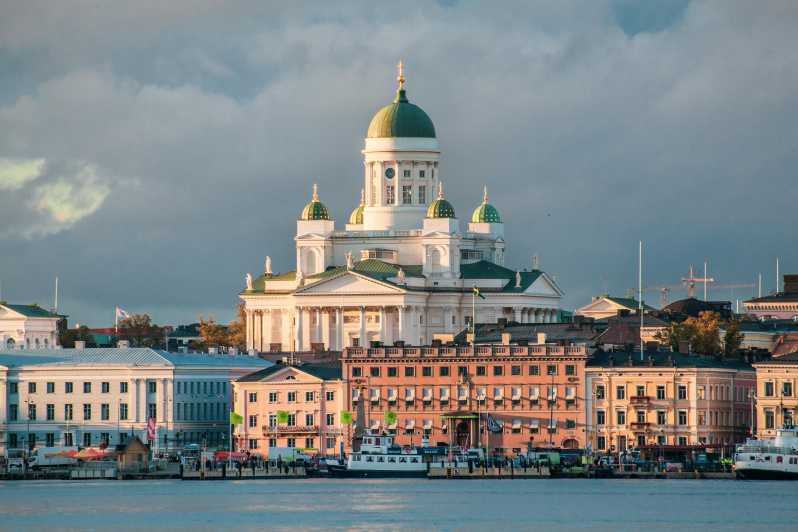
Senate Square is the first major stop, with about 15 minutes for a guided look. This is where Helsinki presents its most formal face, with the grand proportions and orderly design associated with the city’s neoclassical core.
The square gives the guide a natural place to explain how Helsinki developed and how architecture can express power and civic ambition. You will hear about the work of Carl Ludvig Engel, one of the architects associated with Helsinki’s central buildings.
Helsinki Cathedral is covered next, with a short guided stop and a pass-by. The time here is brief, so do not expect a long interior visit. Instead, treat it as part of the larger composition of the square and the city center.
If your main interest is church interiors, this tour is not built around extended time inside the cathedral. Its strength is the way it places the cathedral alongside other periods and building types.
The National Library and a look inside
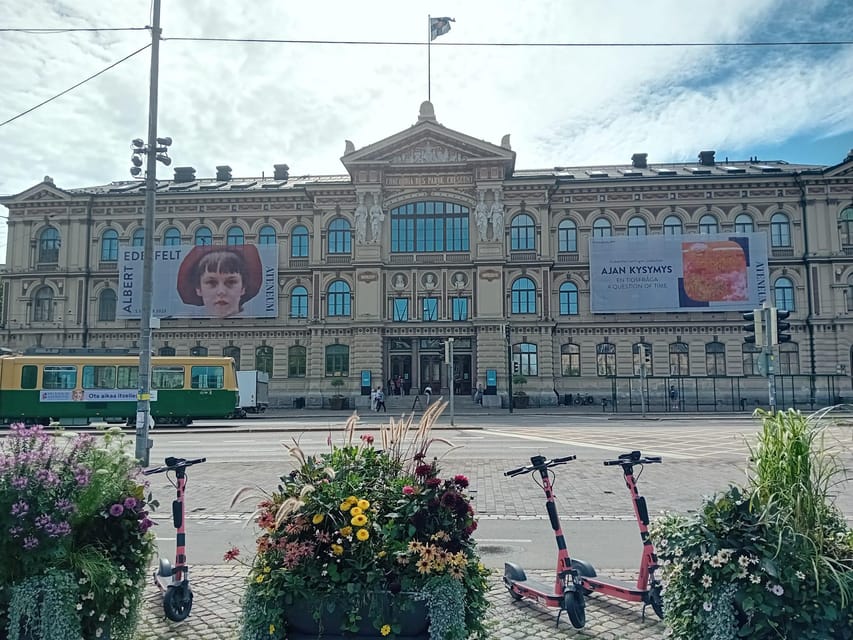
The National Library of Finland receives about 15 minutes, including a visit. This is one of the most useful features of the walk because the experience does not stop at exterior stonework.
Inside, you can pay attention to the relationship between the building’s design and its public purpose. The library is not simply an old façade on a sightseeing route. It is an active civic space, and entering it helps you understand how Finnish public buildings are used.
This is also where a guide can point out details you might pass without noticing. The tour’s strongest moments often come from this kind of close looking, especially if you enjoy decorative features, interior rooms, and the way architecture directs people through a building.
A few more Helsinki half-days to weigh up
- Helsinki: Sightseeing Canal Cruise with Audio Commentary
★ 4.5 · 1,299 reviews - From Helsinki: Nuuksio National Park Half-Day Trip
★ 4.8 · 688 reviews - Helsinki: Tallinn Guided Day Tour with Ferry Crossing
★ 4.6 · 670 reviews - Helsinki: Hop-On Hop-Off City Bus Tour
★ 4.2 · 585 reviews
Cafés, Kappeli, and Esplanadi
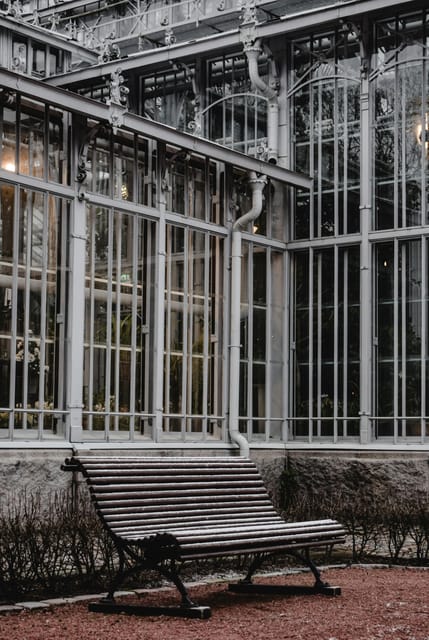
The route then threads through a series of central stops that show Helsinki’s architecture in everyday use. Robert’s Coffee Jugend is visited for about 10 minutes, giving you a chance to see an Art Nouveau setting connected to a working café.
Kappeli follows with a short visit, then the walk continues into Esplanadi. These stops keep the tour from becoming a march between famous monuments. You see places where people eat, meet, shop, work, and pass through the center.
Esplanadi also provides a change of pace after several enclosed interiors. The route is not all grand buildings and formal explanations. It includes the streets and public spaces that give the architecture its daily context.
The Johan Ludvig Runeberg monument is another brief stop. It adds a cultural and national dimension to the walk, showing that Helsinki’s public spaces commemorate more than politicians and architects.
A bookstore, a former bank, and the railway station

Academic Bookstore is one of the tour’s more interesting interior stops, with roughly 10 minutes allotted. Its value is partly practical: you enter a place that might otherwise seem like a shopping stop, then look at it as a significant work of design.
Rautatalo receives a shorter visit. This stop helps broaden the picture beyond the city’s older stone buildings and gives you another example of Helsinki’s modern architectural development.
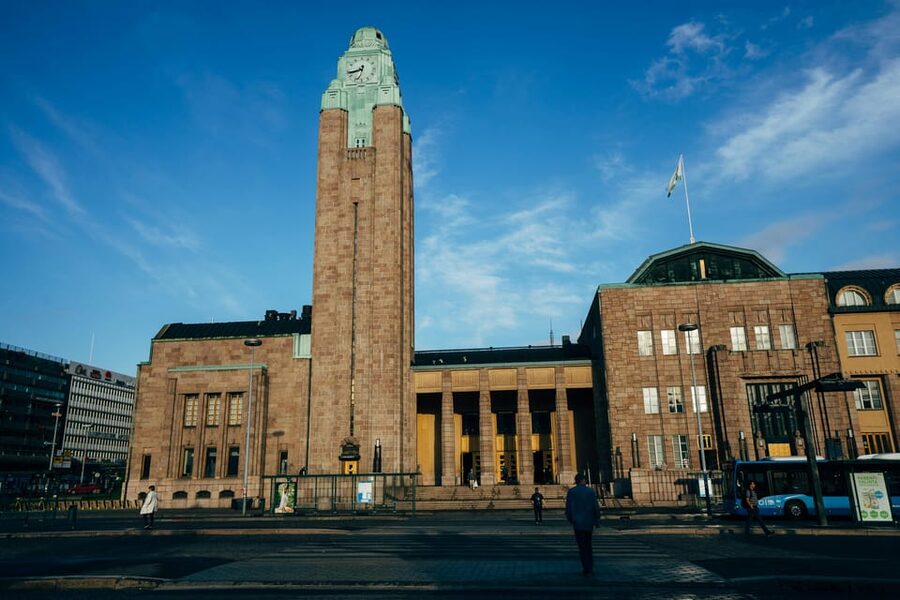
Helsinki Central Station follows for about 10 minutes. Stations are especially useful on an architecture walk because they combine monumental design with constant public activity. You can see how a major civic building handles movement, arrival, and departure while still making a strong visual statement.
Architects such as Eliel Saarinen are part of Helsinki’s wider architectural story, and the route’s focus on named designers helps you connect individual buildings with larger periods and ideas. The guide can also compare the station with earlier and later buildings, which is more useful than treating each stop as a separate fact.
Sanomatalo and the move into contemporary Helsinki
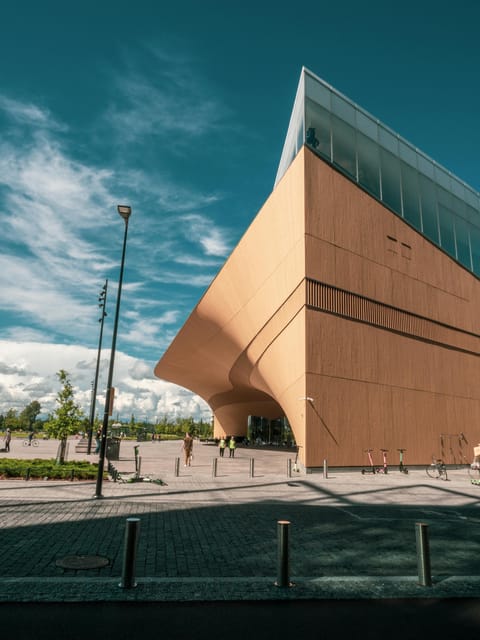
The stop at Fazer Café Sanomatalo takes the tour farther into modern Helsinki. Again, the café itself is part of the building experience rather than an included food break.
This section of the route shows how the center keeps changing. You are no longer looking only at the imperial and early national capital. You are seeing a working media and business district, with architecture designed for modern public and professional life.
The transition is one of the best reasons to take the full route. If you only visit Senate Square, you get one powerful image of Helsinki. If you continue toward Kansalaistori and Oodi, you see a city that uses architecture to discuss openness, community, and contemporary life.
Kansalaistori and Central Library Oodi
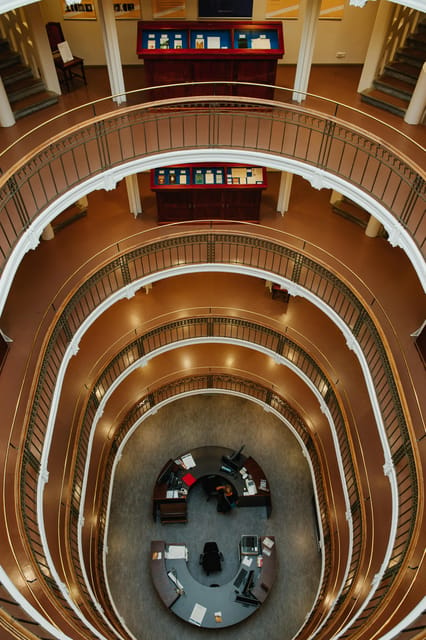
Kansalaistori gets about 15 minutes, and Central Library Oodi receives around 20 minutes. Oodi is the longest single stop on the tour, and that extra time makes sense.
The library is one of Helsinki’s most important modern public buildings. You are not just shown its outside shape. You can enter and see how the design supports community use. The building is often the point that turns a good architecture walk into a memorable city introduction, especially if you are interested in how libraries have changed beyond quiet rows of books.
The stop also reveals something about Finnish civic culture. A library can function as a broad public living room, not merely a place to borrow books. You can look at the spaces, circulation, and details while the guide explains what the building means within Helsinki today.
If you have only a short time in Helsinki, Oodi is worth seeing on its own. With this tour, you get the added benefit of understanding how it differs from the older public buildings earlier in the route.
Amos Rex and Kamppi Chapel

Amos Rex receives a brief guided stop, followed by Kamppi Chapel. These are contemporary landmarks with very different moods, and the contrast is useful.
At Amos Rex, the architecture itself is part of the urban experience. The building’s modern form changes the way the surrounding public space is used, giving the route another example of Helsinki’s willingness to place bold design in the center.
Kamppi Chapel is a short guided visit and pass-by. It adds a quieter note after the larger public spaces and cultural buildings. Since the stop is brief, you should expect an introduction rather than an extended study.
The tour works best when you remain open to these contrasts. You may have a favorite period before starting, but Helsinki becomes easier to understand when you compare the old, the restrained, the decorative, and the experimental.
The Pohjola Insurance Building and the return walk
The Pohjola Insurance Building is the last listed visit before returning to Fazer Café Kluuvikatu. Its carved details are particularly worth your attention. One visitor specifically enjoyed the carvings on a former bank building, and this is the sort of detail the guide is good at drawing out.
Buildings like this reward slow looking. Without guidance, you might walk past an entrance, ornament, or carved figure without knowing why it matters. With a guide pointing out those features, the city starts to feel less like a collection of façades and more like a set of messages about Finnish identity and society.
The walk then returns to the starting café. Because the tour covers a loop through the center, you do not need to arrange a separate ride back to the meeting area.
The guide and the small-group format
The guide is a major part of the value here. Zana is described as patient, attentive, and able to answer questions about Finnish history, architecture, culture, language, food, and customs. That range matters because the buildings make more sense when connected to life outside architecture school.
The group is limited to six people. That is small enough for a natural conversation, and it gives you a better chance to ask about a style or building that catches your eye.
The provider also allows you to request a particular period or style in advance. Use that option. If you care most about Art Nouveau, functionalism, Alvar Aalto, modern public buildings, or contemporary design, saying so before the tour can shape the discussion.
There is one practical limit: not every interior will be open at every time. Office buildings may be closed on weekends, so choose a weekday if entering as many buildings as possible is important to you.
Is $56 a fair price?
At $56 per person, this is not the cheapest way to walk around central Helsinki. You can see many exteriors on your own for free.
The value comes from the guide’s interpretation, the small group, and the interior access. You are paying for three hours of connected explanation, not simply a list of addresses. The route also covers enough ground that you would likely spend extra time finding and understanding the same places independently.
The price makes the most sense for a first visit, a short stay, or anyone who wants architecture tied to Finnish society. It is less compelling if you prefer to wander alone, move at your own pace, or spend a long time inside one museum or monument.
The walk receives a 4.9 rating from 80 reviews, with repeated praise for its pace, content, and the guide’s attention to detail. The strongest pattern is clear: people value the combination of architecture and Finnish history, along with the chance to enter buildings they might otherwise overlook.
Walking conditions and who should book
Wear weather-appropriate clothing. The tour operates rain or shine, and Helsinki’s weather can change during three hours outdoors.
You will walk 5 to 6 kilometers, with regular stops and several indoor visits. The pace is described as relaxed, but this is still a substantial city walk. It is not suitable for wheelchair users, and anyone with mobility concerns should take the distance and urban surfaces seriously.
I would choose this tour if you enjoy design, public buildings, city history, or guided walks with room for questions. It also suits first-time visitors who want a useful orientation before exploring Helsinki on their own.
I would skip it if you want a short highlights tour, a museum-heavy visit, or a route built around only one architect. The experience covers many periods, so its purpose is comparison and context rather than exhaustive study of a single style.
Should you book this Helsinki architecture walk?
Book it if you want to understand Helsinki by looking closely at the places people use every day. The best parts are the small group, the knowledgeable guide Zana, the building interiors, and the shift from Senate Square to Oodi and the newer center.
Choose a weekday when possible, especially if access to office buildings matters to you. Send your preferred architectural interests in advance, wear good walking clothes, and reserve the tour early in your Helsinki schedule. It gives you a useful sense of the city before you return to explore your favorite buildings at your own pace.
FAQ
How long does the Helsinki architecture tour last?
The tour lasts three hours.
How far will I walk?
You will walk approximately 5 to 6 kilometers during the experience.
Where does the tour start?
The meeting point is in front of Fazer Café Kluuvikatu. The guide waits outside the café.
Where does the tour finish?
The walk returns to Fazer Café Kluuvikatu.
What language is the tour conducted in?
The live tour is conducted in English.
How many people are in the group?
The group is limited to six participants.
Is food or drink included?
No. Food and drinks are not included in the tour price.
Can I request a particular architectural style?
Yes. You can tell the activity provider in advance if you want to focus on a specific period or style.
Does the tour operate in bad weather?
Yes. The tour takes place rain or shine, so bring clothing suited to the weather.
Is the tour suitable for wheelchair users?
No. The experience is not suitable for wheelchair users.
Just added around Helsinki
- Wildlife safari with campfire dinner from Helsinki★ 5.0 · 8 reviews
- Traditional smoke sauna experience and national park visit★ 5.0 · 10 reviews
- Helsinki and Porvoo Private Tour by Luxury Car with Guide★ 5.0 · 16 reviews
- Winter kayaking in Eastern Helsinki archipelago★ 5.0 · 3 reviews
- Helsinki Self-Guided Audio Tour★ 3.5 · 14 reviews
- Private Porvoo Tour & Visit Runeberg’s National Poet House★ 5.0 · 3 reviews
- VIP Private Half-Day Trip to Medieval Porvoo from Helsinki★ 4.5 · 9 reviews
- Helsinki Private Tour Medieval Porvoo****★ 4.5 · 10 reviews
Walking Tours, compared.



Ranua Zoo Entry Ticket w/ Walking Tour and Lunch
Read our review →
Small-Group Walking Tour with City Planner Guide
Read our review →

Browse the lists this tour appears in